

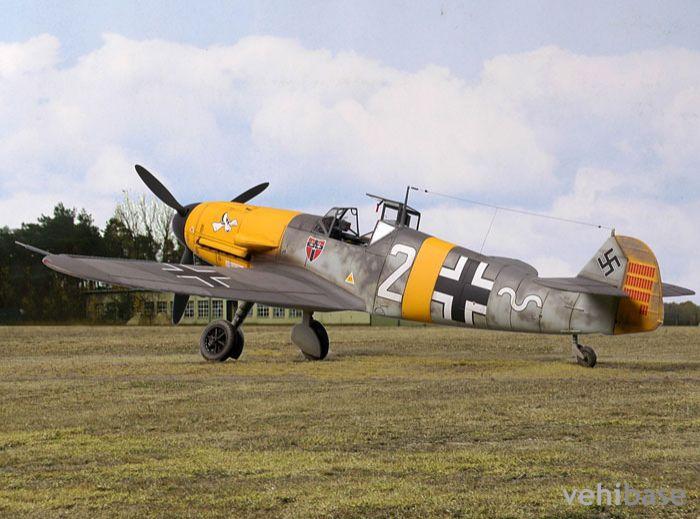
Messerschmitt Bf 109
The Messerschmitt Bf 109 is a historic German fighter aircraft that served during World War II and beyond. It was developed by the German company Bayerische Flugzeugwerke (BFW), later known as Messerschmitt AG, and played a crucial role in the Luftwaffe, the German air force. The Bf 109 was known for its agility and versatile performance.
Equipped with a piston engine, the Bf 109 was designed for air superiority and interception missions. It was one of the most iconic and numerous fighter aircraft used by the Axis powers during World War II. The Bf 109's various models and versions evolved to meet the challenges of air combat. Although it is no longer in active service, the Messerschmitt Bf 109 is remembered as one of the most significant and recognizable fighter aircraft of the war.
Key Features
Pros
Cons
Frequently Asked Questions
What were the primary roles of the Messerschmitt Bf 109 during World War II?
The Bf 109's primary roles included air superiority and interception missions, making it a key fighter aircraft of the Axis powers.
Why is the Bf 109 significant in the history of military aviation?
The Bf 109 is significant for its crucial role in the Luftwaffe and its iconic status as one of the most recognizable fighter aircraft of World War II.
Is the Messerschmitt Bf 109 still in active service with any air force?
No, the Messerschmitt Bf 109 is no longer in active service and is primarily of historical significance.
How did the Bf 109's various models adapt to changing combat situations?
The Bf 109's models evolved to address the challenges of air combat and technological advancements, ensuring its relevance throughout the war.
Did you know?
The Messerschmitt Bf 109 was one of the most widely produced and versatile fighter aircraft of World War II, with over 30,000 units built.
It was flown by many of the top German fighter aces and earned a formidable reputation in air combat.
