

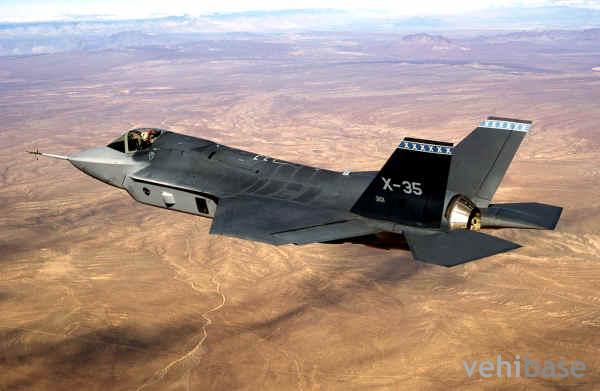
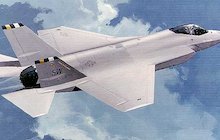
The Lockheed Martin X-35 is a historic American experimental aircraft developed as part of the Joint Strike Fighter (JSF) program, which aimed to create a versatile and affordable next-generation fighter aircraft. The X-35 was developed by Lockheed Martin and played a crucial role in the competition to become the future Joint Strike Fighter for multiple U.S. military branches.
Equipped with a turbofan engine, the X-35 was designed to demonstrate its capabilities as a multi-role fighter, emphasizing short takeoff and vertical landing (STOVL) capabilities, among others. It represented a pivotal stage in the development of the F-35 Lightning II, the aircraft that eventually emerged from the JSF program. The X-35 was instrumental in proving the feasibility of a highly adaptable and technologically advanced fighter aircraft.
Key Features
Pros
Cons
Frequently Asked Questions
What was the primary role of the Lockheed Martin X-35?
The primary role of the X-35 was to serve as an experimental aircraft to demonstrate the feasibility of the Joint Strike Fighter (JSF) program, showcasing multi-role capabilities, including short takeoff and vertical landing (STOVL).
How did the X-35 contribute to the development of the F-35 Lightning II?
The X-35 played a pivotal role in proving the concept and capabilities required for the F-35 Lightning II, which eventually became the next-generation Joint Strike Fighter for various U.S. military branches.
Is the Lockheed Martin X-35 still in active service with any air force or navy?
No, the Lockheed Martin X-35 was a developmental prototype and is no longer in active service.
What were some of the unique features or capabilities demonstrated by the X-35?
The X-35 showcased various features, including its ability to perform short takeoff and vertical landing (STOVL), making it adaptable for a range of operational scenarios.
2 members saved it
5 photos




Did you know?
The X-35's successful demonstration of STOVL capabilities was a crucial factor in its selection as the basis for the F-35B variant of the Lightning II, designed for the U.S. Marine Corps.
The Joint Strike Fighter program represented a significant step forward in creating a common multi-role fighter for different branches of the U.S. military, streamlining logistics and costs.
