

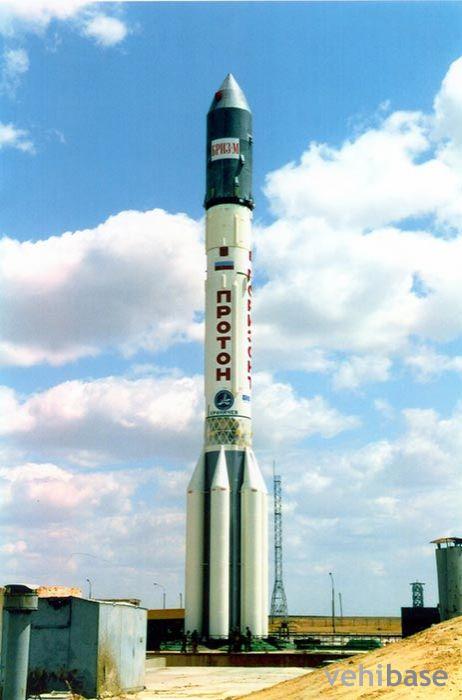
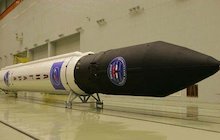
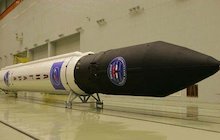
The Khrunichev Proton-M is a heavy-lift launch vehicle developed and manufactured by the Khrunichev State Research and Production Space Center in Russia. It is a versatile and powerful rocket used to launch a wide range of payloads into geostationary transfer orbit (GTO) and other orbits. The Proton-M has been a workhorse of the Russian space program, serving both commercial and government missions.
Known for its robustness and lifting capacity, the Proton-M has been used to launch communication satellites, scientific missions, and interplanetary spacecraft. It has a long history of successful launches and continues to play a crucial role in the global space launch industry.
Key Features
Pros
Cons
Frequently Asked Questions
What is the payload capacity of the Proton-M?
The Proton-M can carry a payload of up to several tons to GTO, making it suitable for launching large communication satellites.
Has the Proton-M been used for interplanetary missions?
Yes, the Proton-M has been used to launch spacecraft on interplanetary missions, including missions to Mars and other destinations in the solar system.
How does the Proton-M compare to other heavy-lift launch vehicles?
The Proton-M competes with other heavy-lift rockets like the Ariane 5 and Falcon Heavy. It offers a reliable option for launching large payloads, particularly to GTO.
Are there any notable missions associated with the Proton-M?
Yes, the Proton-M has launched numerous missions, including the launch of the ExoMars spacecraft in collaboration with the European Space Agency (ESA) and missions for the Russian Federal Space Agency (Roscosmos).
4 members saved it
4 photos


.jpg)
Did you know?
The Proton-M rocket has a history dating back to the 1960s and has undergone several iterations and improvements over the years.
One of the most famous Proton-M launches was the launch of the Russian modules of the International Space Station (ISS), contributing to the assembly of the ISS in orbit.
