

.jpg)
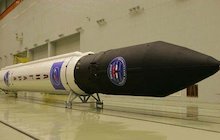
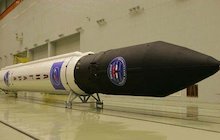
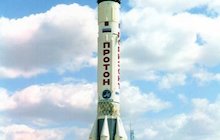
The Khrunichev Proton-K, designated as 8K82K, was a powerful expendable launch vehicle developed by the Khrunichev State Research and Production Space Center in Russia. It was part of the Proton rocket family and played a crucial role in launching a wide range of payloads into geostationary transfer orbit (GTO), polar orbits, and interplanetary missions. The Proton-K was one of the most successful and reliable launch vehicles in the history of spaceflight.
Throughout its operational history, the Proton-K was used for launching communication satellites, scientific spacecraft, planetary missions, and modules for space stations, including the Russian space station Mir. Its legacy includes contributions to both Soviet and Russian space programs.
Key Features
Pros
Cons
Frequently Asked Questions
How many Proton-K rockets were launched?
The Proton-K had a long and successful operational history, with numerous launches conducted. Exact numbers may vary, but it was used extensively for several decades.
What types of payloads were typically launched by the Proton-K?
The Proton-K was used to launch a wide range of payloads, including communication satellites, scientific instruments, space station modules, and interplanetary spacecraft.
What led to the retirement of the Proton-K?
The retirement of the Proton-K was primarily due to the introduction of more advanced and capable members of the Proton rocket family, such as the Proton-M.
What was the significance of the Proton-K in planetary exploration?
The Proton-K was used for launching spacecraft on interplanetary missions, contributing to planetary exploration efforts. Notable missions include missions to Venus, Mars, and the Moon.
3 members saved it
.jpg)

Did you know?
The Proton-K was known for its impressive lifting capacity, making it suitable for launching heavy payloads to a variety of orbits, including GTO.
The Proton-K played a vital role in supporting the assembly and resupply of the Russian space station Mir, which operated in low Earth orbit for over a decade.
