

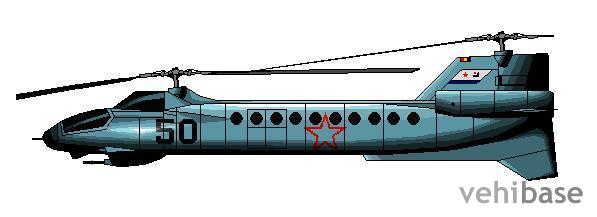
The Kamov V-50 is a historic Soviet experimental helicopter developed and built during the mid-20th century. It is known for its innovative tandem rotor design, featuring two sets of counter-rotating rotors mounted one behind the other. The V-50 was primarily designed for research and testing purposes, showcasing advanced rotorcraft technology of its time.
The Kamov V-50 holds a place in aviation history as one of the early Soviet tandem rotor helicopters. While it had limited production and operational use, it played a role in the development of tandem rotor aircraft in the Soviet Union.
Key Features
Pros
Cons
Frequently Asked Questions
What was the primary purpose of the Kamov V-50?
The primary purpose of the Kamov V-50 was research and testing of advanced rotorcraft technology, serving as an experimental helicopter.
What is the unique feature of the V-50's rotor system?
The Kamov V-50 features an innovative tandem rotor system with two sets of counter-rotating rotors, providing unique flight characteristics.
Is the V-50 widely used in military or civilian operations?
No, the Kamov V-50 is not intended for widespread production or operational use. It is primarily an experimental helicopter.
What is the historical significance of the V-50 in rotorcraft technology?
The Kamov V-50 is historically significant as one of the early tandem rotor helicopters, contributing to the development of tandem rotor aircraft in the Soviet Union.
3 members saved it





Did you know?
The tandem rotor design of the Kamov V-50 provided unique flight characteristics and stability, contributing to its role in advancing rotorcraft technology.
While not widely deployed, the V-50 played a part in the early exploration of rotorcraft design possibilities.
