

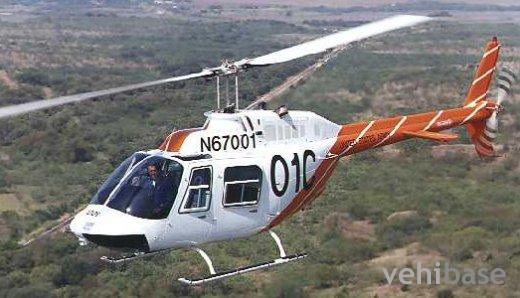
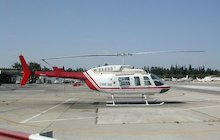
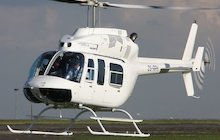
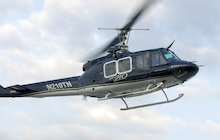
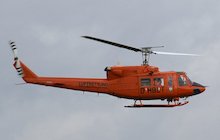
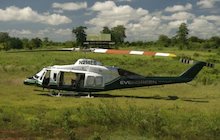
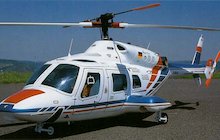
The Bell TH-67 Creek is a military training helicopter designed for the primary and basic training of U.S. Army and U.S. Navy rotary-wing pilots. It is recognized for its role in preparing future helicopter pilots by providing a safe and effective platform for initial flight training. The TH-67 Creek is a militarized version of the civilian Bell 206B JetRanger helicopter.
The TH-67 Creek features a reliable and proven design, with dual flight controls to accommodate both the instructor and the trainee pilot. It is equipped with the necessary instrumentation and systems for flight training, including communication and navigation equipment. The Creek's performance characteristics make it suitable for teaching fundamental helicopter flight maneuvers, instrument flight, and basic emergency procedures.
Key Features
Pros
Cons
Frequently Asked Questions
What is the primary purpose of the Bell TH-67 Creek?
The primary purpose of the Bell TH-67 Creek is to serve as a military training helicopter for primary and basic rotary-wing pilot training.
Is the TH-67 Creek used for combat operations?
No, the TH-67 Creek is not designed for combat operations. Its main role is to prepare trainee pilots for more advanced military helicopter platforms.
What is the civilian counterpart of the TH-67 Creek?
The TH-67 Creek is derived from the civilian Bell 206B JetRanger helicopter, which shares its basic design.
Are trainee pilots required to undergo additional training after using the TH-67 Creek?
Yes, after completing primary and basic training on the TH-67 Creek, trainee pilots typically undergo further training on more advanced military helicopter platforms that are suited for combat and operational missions.
7 members saved it


Did you know?
The TH-67 Creek has been instrumental in training numerous U.S. Army and U.S. Navy helicopter pilots who go on to operate a wide range of military helicopters, including attack helicopters and transport helicopters.
Its civilian counterpart, the Bell 206B JetRanger, is a popular civilian helicopter used in various roles, including law enforcement, emergency medical services, and corporate transportation.
