

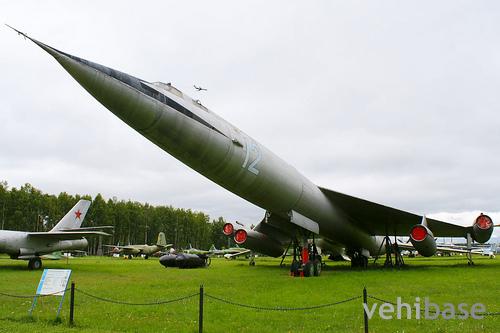
The Myasishchev M-50, also known as the "Bounder," was a Soviet experimental supersonic bomber aircraft developed during the Cold War era. It was designed to serve as a high-speed strategic bomber capable of carrying nuclear payloads. The M-50 was an ambitious project that pushed the boundaries of aviation technology during its time.
The M-50 featured a unique blended-wing design with four engines housed in nacelles above the wing. It had the ability to achieve supersonic speeds and was intended to penetrate enemy air defenses quickly. While the M-50 project did not enter mass production, it played a significant role in advancing supersonic aircraft technology in the Soviet Union.
Key Features
Pros
Cons
Frequently Asked Questions
What was the primary role of the Myasishchev M-50?
The primary role of the Myasishchev M-50 was to serve as an experimental supersonic bomber designed for high-speed strategic bombing missions.
Why didn't the M-50 enter mass production or operational service?
The M-50 faced challenges in terms of production, cost, and technological limitations, leading to its discontinuation as a mass-produced aircraft.
Did the M-50 influence the design of other aircraft?
While it did not enter operational service, the M-50 contributed to the development of subsequent supersonic aircraft by pushing the boundaries of technology and design.
What is the significance of the Myasishchev M-50 in aviation history?
The M-50 is significant as an innovative and pioneering supersonic bomber that advanced aviation technology during the Cold War era, even though it did not enter mass production.
4 members saved it

Did you know?
The Myasishchev M-50 was part of the Soviet Union's efforts to develop advanced military aircraft during the Cold War, showcasing the nation's aeronautical capabilities.
Although the M-50 did not achieve operational status, its design and research had a lasting impact on subsequent supersonic and strategic bomber aircraft.
