

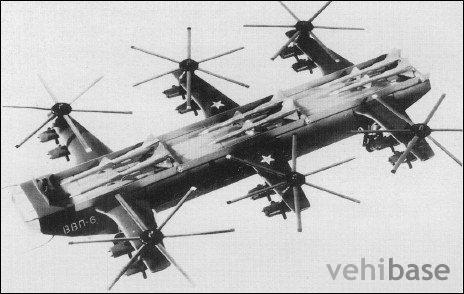
The Yakovlev VVP-6 was an ambitious experimental aircraft design, conceived as a flying support and surface-to-air missile platform with vertical takeoff and landing (VTOL) capabilities. However, this innovative concept never progressed beyond the model stage.
Considered one of the most radical designs to emerge from the Yakovlev OKB studio, the VVP-6 seemed more like a creation from science fiction than a practical aircraft for production. Its primary purpose was to serve as a giant VTOL support platform, working in coordination with other VTOL aircraft, such as the Yak-38.
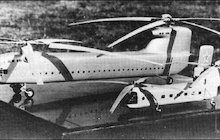
Various functions were envisioned for this unique line of vehicles, including the transportation of essential supplies like food, fuel, and munitions. The aircraft's design was massive, featuring a length of 49 meters. One version of the VVP-6 was even intended to carry a complete surface-to-air missile (SAM) system, with six SA-2 missiles (known as "Guideline") and launchers mounted on its upper surface, while reloads and supporting radars would be stored internally.
The VVP-6 was equipped with six six-blade rotors, each mounted on pylons extending from the sides of the aircraft. These rotors were powered by a total of 24 turboshaft engines, providing the necessary lift and propulsion for VTOL operations.
Ultimately, the need for such an aircraft concept waned when the Soviet Air Force did not proceed with the deployment of land-based VTOL jets, rendering the VVP-6's intended role obsolete.
Key Features
Pros
Cons
Did you know?
The Yakovlev VVP-6 was a highly unconventional and imaginative aircraft design that pushed the boundaries of what was considered possible in aviation.
While it never became operational, the VVP-6 remains a testament to the creativity and innovation of aerospace engineers and designers.
