

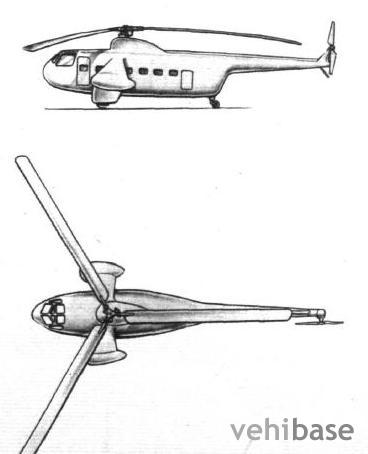
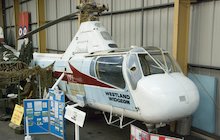
The Westland W-80 is a historic helicopter that played a pioneering role in the early development of rotorcraft technology. It was designed as an experimental aircraft to explore various rotor configurations and flight principles. The helicopter featured a single main rotor and a smaller anti-torque tail rotor, a design that became common in later helicopter models.
The Westland W-80 is celebrated for its contribution to advancing helicopter technology and the understanding of rotorcraft aerodynamics. While it is no longer in active use, its legacy as a crucial prototype in the evolution of helicopters is significant, and it remains an essential part of aviation history.
Key Features
Pros
Cons
Frequently Asked Questions
What was the primary purpose of the Westland W-80?
The primary purpose of the Westland W-80 was to serve as an experimental aircraft for rotorcraft research and the development of helicopter technology.
How did the smaller tail rotor on the Westland W-80 function?
The smaller tail rotor on the Westland W-80 served as an anti-torque mechanism to counteract the rotational forces generated by the main rotor.
Is the Westland W-80 still in use today?
No, the Westland W-80 is no longer in active use. It is considered an obsolete and historic rotorcraft.
What advancements in rotorcraft technology were influenced by the Westland W-80?
The Westland W-80 contributed to the understanding of rotor configurations and aerodynamic principles, which later influenced the design of modern helicopters.
3 members saved it
Did you know?
The Westland W-80's experiments with rotor configurations and anti-torque systems helped pave the way for more stable and controllable helicopters.
It was a part of a broader effort in rotorcraft research and development during its time, leading to important advancements in vertical flight.
