

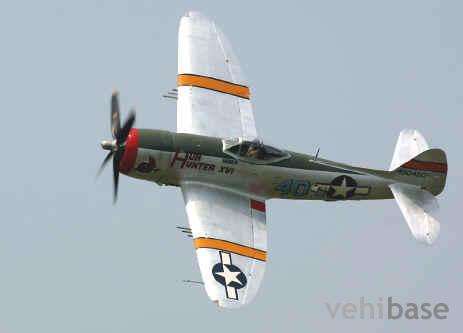
Republic P-47 Thunderbolt
The Republic P-47 Thunderbolt, often simply referred to as the "Jug," is a legendary American fighter-bomber aircraft from World War II. It was known for its rugged construction, powerful engine, and excellent ground-attack capabilities. The P-47 played a crucial role in both the European and Pacific theaters of the war, earning a reputation for its durability and firepower.
With its distinctive bubble canopy and heavy armament, the P-47 was highly effective in air-to-ground missions, providing close air support to ground troops. It also had respectable performance in air-to-air combat, making it a versatile and reliable aircraft for various wartime missions.
Key Features
Pros
Cons
Frequently Asked Questions
What was the primary role of the Republic P-47 Thunderbolt during World War II?
The P-47 Thunderbolt primarily served as a fighter-bomber, providing close air support to ground troops and conducting ground-attack missions.
What made the P-47 Thunderbolt stand out as a fighter aircraft?
The P-47 was known for its rugged construction, excellent ground-attack capabilities, and respectable performance in air-to-air combat, making it a versatile and reliable wartime aircraft.
How did the P-47 Thunderbolt contribute to the Allied victory in World War II?
The P-47 Thunderbolt played a crucial role in the Allied victory by providing air support to ground troops, conducting bombing missions, and engaging enemy aircraft in dogfights.
Is the Republic P-47 Thunderbolt still in active military service today?
No, the P-47 Thunderbolt is a historical aircraft and has been retired from active military service for many years.



Did you know?
The Republic P-47 Thunderbolt was one of the largest and heaviest single-engine fighter aircraft used during World War II.
It was known for its distinctive "razorback" and later "bubble canopy" configurations, which improved the pilot's visibility.
