

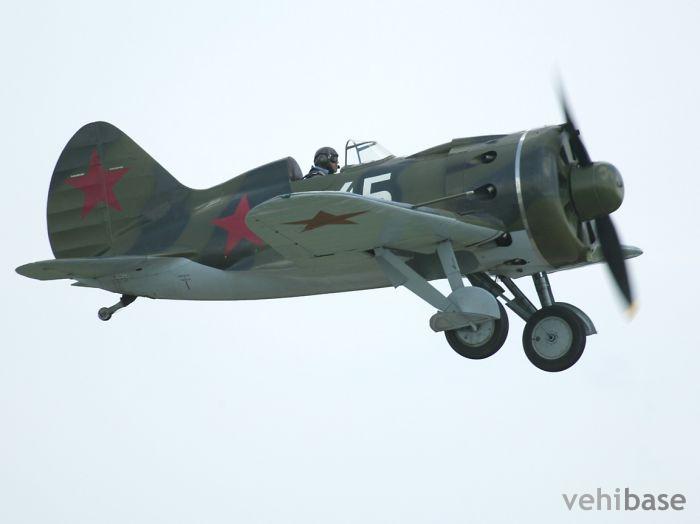
Polikarpov I-16
The Polikarpov I-16, often referred to as the "Rata," is a historical Soviet fighter aircraft that played a significant role during the Spanish Civil War and World War II. It was designed by Nikolai Polikarpov and served as one of the world's first low-wing cantilever monoplane fighters with retractable landing gear.
The I-16 featured a sleek and innovative design and was armed with machine guns and cannons. It was used for air-to-air combat and ground attack missions. The aircraft's agility and speed made it a formidable adversary in dogfights. While it faced technological advancements and eventually became obsolete, the I-16 holds an important place in aviation history as an early monoplane fighter.
Key Features
Pros
Cons
Frequently Asked Questions
What role did the Polikarpov I-16 play during World War II?
The I-16 served as a fighter aircraft during World War II, engaging in air-to-air combat and ground attack missions.
What made the I-16 unique in its design?
The I-16 was one of the world's first low-wing cantilever monoplane fighters, setting it apart from earlier biplanes.
Why is the I-16 sometimes referred to as the "Rata"?
The I-16 earned the nickname "Rata," which means "rat" in Spanish, during its service in the Spanish Civil War.
Is the Polikarpov I-16 preserved in museums or aviation collections today?
Examples of the I-16 are preserved in aviation museums and collections, serving as a historical reminder of early monoplane fighters.
Related planes

Did you know?
The Polikarpov I-16 was a pioneering design and represented a significant advancement in Soviet fighter aircraft technology.
It earned the nickname "Rata" during its service in the Spanish Civil War, where it saw significant combat action.
