

.jpg)
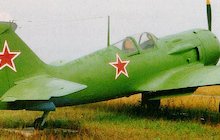
Lavochkin LaGG-3 (Gorbunov Goudkov)
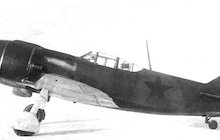
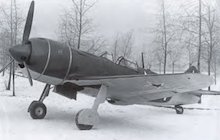
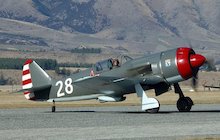
The Lavochkin LaGG-3 is a historic Soviet fighter aircraft developed during World War II. It was designed by the Lavochkin-Gorbunov-Goudkov (LaGG) design bureau, which included the contributions of Semyon Lavochkin, Vladimir Gorbunov, and Mikhail Goudkov. The LaGG-3 was one of the early Soviet fighter aircraft used during the war.
Equipped with a piston engine, the LaGG-3 was designed primarily for air superiority and interception missions. It was one of the Soviet Union's attempts to produce a capable fighter aircraft to counter the Axis powers. The LaGG-3 played a role in the early stages of World War II but faced various challenges, including issues with its wooden construction. Despite these challenges, it remains a part of the history of Soviet military aviation.
Key Features
Pros
Cons
Frequently Asked Questions
What were the primary missions of the Lavochkin LaGG-3 during World War II?
The primary missions of the LaGG-3 included air superiority and interception missions, as part of the Soviet Union's efforts during World War II.
Why is the LaGG-3 significant in the history of military aviation?
The LaGG-3 is significant for its role as one of the early Soviet fighter aircraft used during World War II, contributing to the Soviet Union's efforts to establish air superiority.
Is the Lavochkin LaGG-3 still in active service with any air force?
No, the Lavochkin LaGG-3 is no longer in active service and is primarily of historical significance.
What were some of the notable challenges and issues faced by the LaGG-3?
The LaGG-3 faced challenges related to its wooden construction, which impacted its overall performance and durability in combat.
2 members saved it
.jpg)

Did you know?
The LaGG-3 was one of several Soviet fighter aircraft developed during World War II, and it played a role in the early stages of the conflict on the Eastern Front.
It is part of the history of Soviet aviation design and technology during a pivotal period in military history.
