


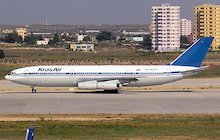
The Ilyushin Il-86, also known as the Camber, is a Russian wide-body commercial airliner recognized for its capacity and service. Developed in the late 20th century, it played a significant role in Soviet and later Russian civil aviation, serving as one of the early wide-body aircraft. The Il-86 is typically powered by four jet engines and is renowned for its spacious interior and ability to carry a large number of passengers.
The Il-86 holds historical significance in the development of Soviet and Russian civil aviation. It offered an essential mode of long-haul travel, connecting various destinations within the Soviet Union and beyond. While newer aircraft have since taken its place, the Il-86 remains an iconic symbol of the era and the expansion of air travel.
Key Features
Pros
Cons
Frequently Asked Questions
What were the primary goals of the Ilyushin Il-86 Camber aircraft?
The primary goals of the Ilyushin Il-86 Camber were to provide a wide-body commercial airliner with significant capacity for long-haul travel, connecting various destinations within the Soviet Union and beyond.
What types of aviation activities was the Il-86 primarily suited for?
The Il-86 was primarily suited for long-haul commercial aviation, serving as a wide-body aircraft to connect multiple destinations within the Soviet Union and internationally.
What are some limitations of the Il-86 Camber as a commercial airliner?
The Il-86 Camber is less fuel-efficient and technologically advanced compared to modern wide-body aircraft. It is primarily suited for historical and nostalgic purposes rather than contemporary commercial operations.



Did you know?
The Ilyushin Il-86 Camber is celebrated for its capacity and its role in expanding long-haul and wide-body air travel, connecting destinations during the era of its operation.
It reflects the importance of providing wide-body airliners for the transportation of a large number of passengers, contributing to the growth of air travel and connectivity within the Soviet Union and internationally.
