

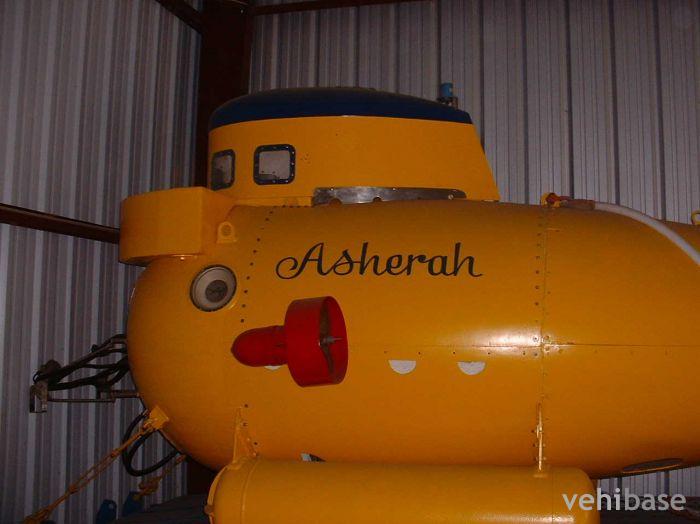
The General Dynamics Asherah was a pioneering American research submersible with a rich history of underwater exploration. Owned by the University of Pennsylvania and utilized by renowned archaeologist George F. Bass, this submersible played a significant role in examining underwater archaeological sites.
Named after Asherah, an ancient Semitic goddess known as "she who treads on the sea," the Asherah was commissioned in 1963 and constructed by the Electric Boat Division of General Dynamics in Groton, Connecticut. It was launched on May 28, 1964, marking a milestone in underwater research.
The two-person submarine had impressive specifications. It measured 16 feet in length, weighed 4.5 tons, and could achieve speeds of up to 4 knots, all powered by rechargeable batteries. The Asherah was capable of diving to a depth of 600 feet (180 meters), opening up new possibilities for marine exploration.
Key Features
Pros
Cons
Frequently Asked Questions
What was the maximum depth the General Dynamics Asherah could reach?
The General Dynamics Asherah was designed to reach depths of up to 600 feet (180 meters).
What significant contributions did the Asherah make to marine science?
The Asherah made pioneering contributions to marine archaeology, including underwater wreck mapping and the development of advanced research techniques.
How was the Asherah powered?
The Asherah was powered by rechargeable batteries, enabling it to operate underwater.
Why was the Asherah eventually sold?
The sale of the Asherah was prompted by challenges such as limited navigation equipment, restricted visibility, complex operation, and high insurance premiums, which made its use less practical.
2 members saved it
Related submersibles
Did you know?
The General Dynamics Asherah's contributions to underwater archaeology and research techniques have left a lasting legacy in the field of marine science.
The submersible was named after Asherah, an ancient Semitic goddess associated with the sea, reflecting its role in exploring the ocean's depths.
