

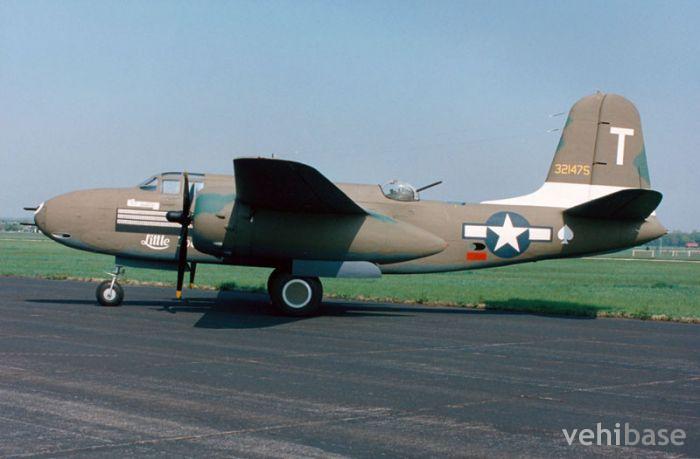
Douglas A-20 Havoc
The Douglas A-20 Havoc is a historic twin-engine light bomber and attack aircraft that played a pivotal role in military aviation during World War II. Known for its speed and versatility, the A-20 Havoc was used by several Allied nations in various combat theaters. It was employed for a range of missions, including precision bombing, ground attack, and reconnaissance.
The Douglas A-20 Havoc is celebrated for its contributions to Allied air forces during World War II, its adaptability for multiple roles, and its significant impact on the outcome of the war. While it is no longer in active military service, it remains a symbol of excellence in light bomber aircraft.
Key Features
Pros
Cons
Frequently Asked Questions
What were the primary roles of the Douglas A-20 Havoc?
The Douglas A-20 Havoc served as a twin-engine light bomber and attack aircraft, used for precision bombing, ground attack, and reconnaissance during World War II.
In which theaters of operation was the Douglas A-20 Havoc employed?
The A-20 Havoc was used by various Allied nations in different combat theaters, making significant contributions to the Allied air campaign.
Is the Douglas A-20 Havoc still in active military service?
No, the aircraft is no longer in active military service but holds a lasting legacy in the history of military aviation.
How has the Douglas A-20 Havoc impacted the history of light bomber aircraft?
The A-20 Havoc is celebrated for its adaptability, speed, and contributions to Allied air forces during World War II, leaving a lasting legacy of excellence in light bomber aircraft.
Did you know?
The Douglas A-20 Havoc earned the nickname "Boston" when used by the Royal Air Force, and it served in North Africa, the Pacific, and European theaters during World War II.
It was one of the most versatile and widely used light bombers of the war, with over 7,000 aircraft produced in various versions.
