

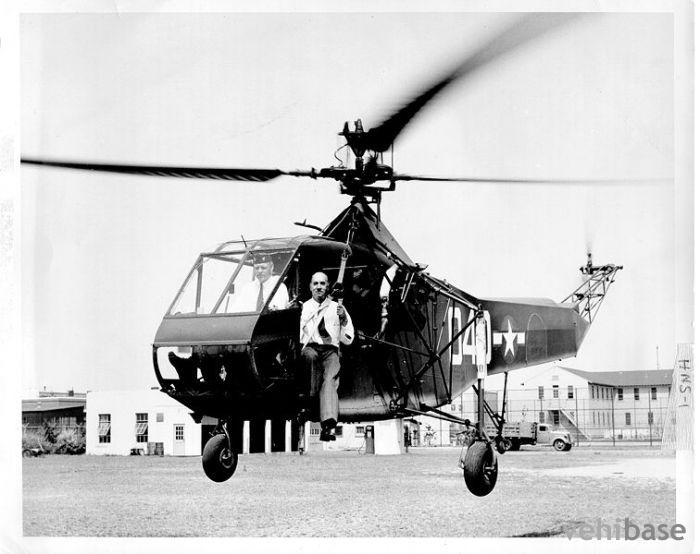
Sikorsky S-47
The Sikorsky S-47, also known as the Sikorsky XR-4, holds a historic place in the evolution of rotary-wing aviation as one of the earliest successful helicopters. It played a pivotal role in advancing the technology and capabilities of vertical flight. The S-47 was developed to explore the potential of helicopters in various applications, including military, civilian, and research roles.
The S-47 featured a single main rotor and a small tail rotor, providing stability and control. It was powered by a piston engine and had a relatively basic design compared to modern helicopters. The S-47's significance lies in its pioneering spirit and contributions to the development of more advanced helicopters in the future. While it may not be in active use today, its legacy lives on in the history of rotary-wing aviation.
Key Features
Pros
Cons
Frequently Asked Questions
What is the historical significance of the Sikorsky S-47 helicopter?
The Sikorsky S-47, or XR-4, holds historical significance as one of the earliest successful helicopters, contributing to the advancement of early rotary-wing aviation and the development of modern helicopters.
What were some of the key design features of the S-47?
The S-47 featured a single main rotor, a tail rotor for stability and control, and was powered by a piston engine. Its design was relatively basic compared to contemporary helicopters.
Is the Sikorsky S-47 still in use today?
The Sikorsky S-47 is not in active use today, as it is a historic helicopter model that played a significant role in the early development of rotary-wing aviation.
How did the S-47 contribute to the advancement of helicopter technology?
The S-47 served as an exploratory platform that allowed engineers and aviation pioneers to experiment with helicopter technology, paving the way for the design and development of more advanced rotary-wing aircraft.


Did you know?
The Sikorsky S-47, or XR-4, holds a special place in the history of aviation as one of the first helicopters to demonstrate successful vertical flight, inspiring further innovation in rotorcraft design.
Its pioneering achievements laid the foundation for the development of modern helicopters with advanced capabilities, showcasing the progress of rotary-wing aviation over the years.
