

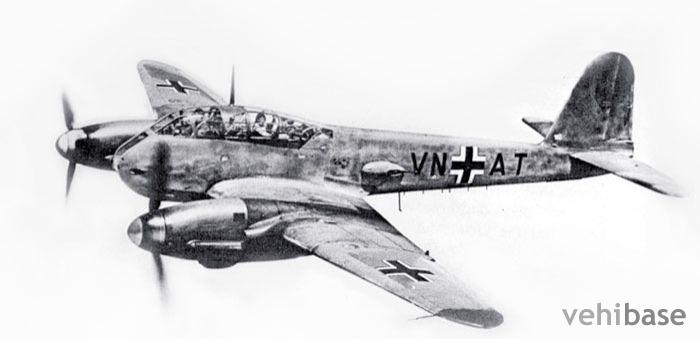
Messerschmitt Me 210
The Messerschmitt Me 210 was a German twin-engine heavy fighter aircraft developed during World War II. It was intended to be a successor to the Messerschmitt Bf 110 and was designed for various roles, including bomber destroyer, ground attack, and reconnaissance. However, the Me 210 faced numerous challenges during its development and production, leading to a problematic service history.
The aircraft featured a twin-engine design and was armed with various combinations of cannons, machine guns, and external bomb racks. Despite its initial promise, the Me 210 suffered from aerodynamic and stability issues, which led to a high number of accidents and crashes during its testing phase. These challenges resulted in the development of the improved Messerschmitt Me 410, which addressed many of the Me 210's issues and saw more success in combat roles.
Key Features
Pros
Cons
Frequently Asked Questions
What were the primary mission profiles for the Messerschmitt Me 210?
The Me 210 was designed for various roles, including bomber interception, ground attack, and reconnaissance missions.
Why did the Me 210 have a problematic service history?
The Me 210 faced numerous challenges, including aerodynamic and stability issues, which resulted in a high number of accidents and crashes during its testing and operational use.
What aircraft succeeded the Messerschmitt Me 210?
The Messerschmitt Me 410, an improved version, succeeded the Me 210 and addressed many of its issues, finding more success in combat roles.
Did the Me 210 contribute to the development of subsequent aircraft designs?
Despite its issues, the Me 210 contributed to the development of subsequent German aircraft designs and helped identify and address stability and aerodynamic challenges in aircraft design.
3 members saved it
Did you know?
The Messerschmitt Me 210 was initially designed to be a versatile heavy fighter, but it faced numerous challenges and had a problematic service history.
The Me 210's development challenges and stability issues led to the development of the improved Messerschmitt Me 410, which performed better in combat roles.
