

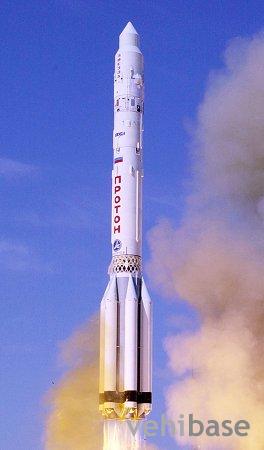
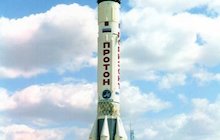
The Khrunichev Proton is a heavy-lift launch vehicle developed by the Khrunichev State Research and Production Space Center in Russia. It is designed for launching payloads into various orbits, including geostationary transfer orbit (GTO) and low Earth orbit (LEO). The Proton launch vehicle is renowned for its impressive payload capacity and has been used for a wide range of commercial and government space missions.
The Proton rocket has played a significant role in Russia's space program and has been a reliable workhorse for launching satellites and interplanetary missions.
Key Features
Pros
Cons
Frequently Asked Questions
What is the payload capacity of the Proton to GTO?
The Proton has a significant payload capacity to GTO, making it suitable for launching heavy payloads and interplanetary missions.
Has the Proton been used for any notable interplanetary missions?
Yes, the Proton launch vehicle has been used for launching spacecraft on interplanetary missions, including missions to Mars and other destinations in the solar system.
How does the Proton compare to other heavy-lift launch vehicles?
The Proton is one of Russia's heavy-lift launch vehicles and is known for its impressive payload capacity. It competes with other heavy-lift launch providers in the global space launch market.
What role has the Proton played in Russia's space exploration efforts?
The Proton has been a cornerstone of Russia's space program, enabling the launch of a wide range of payloads, including communication satellites, scientific missions, and planetary exploration spacecraft.
3 members saved it

.jpg)
Did you know?
The Proton launch vehicle has a long history of successful launches and has contributed to Russia's achievements in space exploration.
Russia has used the Proton for launching missions to various celestial bodies, including Mars, Venus, and the Moon.
