

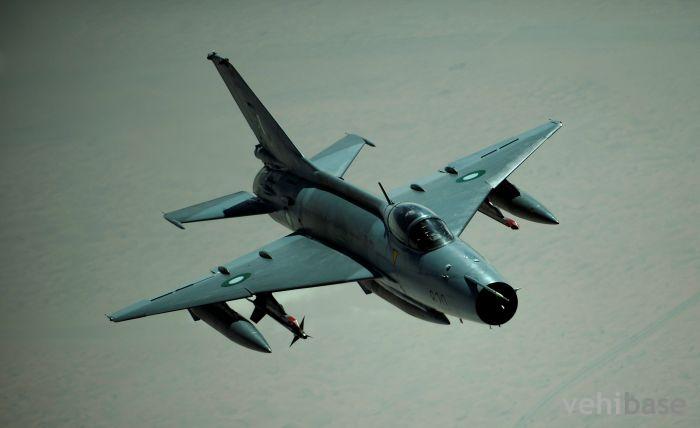
Chengdu J-7
The Chengdu J-7 is a Chinese fighter aircraft that was developed in the 1960s and is based on the Soviet Mikoyan-Gurevich MiG-21. It is powered by a Liming Wopen-13A turbojet engine, allowing it to achieve a top speed of approximately 2,175 kilometers per hour (1,352 miles per hour). The J-7 played a significant role in the Chinese People's Liberation Army Air Force and other air forces worldwide.
The Chengdu J-7 is known for its agility and performance, making it an effective fighter in air combat. It has been used in various roles, including air defense and ground attack missions. The J-7 has contributed to China's air defense capabilities and has been an important asset in the development of the country's aviation industry.
Key Features
Pros
Cons
Frequently Asked Questions
What type of engine powered the Chengdu J-7?
The J-7 was powered by a Liming Wopen-13A turbojet engine, known for its performance and reliability.
Is the Chengdu J-7 still in use today?
While some variants may still be in limited service, the Chengdu J-7 is no longer in active military service with some air forces but retains its historical significance.
What were the primary roles of the J-7 in combat?
The J-7 was used in roles including air defense and ground attack missions, showcasing its versatility.
How has the J-7 contributed to China's aviation industry?
The Chengdu J-7 has been an important asset in the development of China's aviation industry and its air defense capabilities.

.jpg)

Did you know?
The Chengdu J-7 is a Chinese fighter aircraft that played a significant role in air combat and contributed to China's air defense capabilities.
While no longer in widespread service, the J-7 is a testament to the advancements in China's aviation industry and its role in air forces worldwide.
