

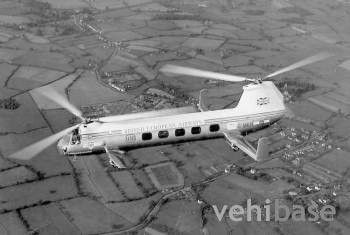
The Bristol 173 is a historic British helicopter developed by the Bristol Aeroplane Company during the 1950s. It is recognized for its tandem rotor configuration, featuring two large, counter-rotating rotors mounted one in front of the other. This design provided the Bristol 173 with exceptional lifting capacity and stability.
The Bristol 173 was primarily designed for military transport purposes and could carry troops or cargo in its spacious cabin. It played a significant role in military logistics during the 1950s, showcasing the benefits of tandem rotor technology.
Key Features
Pros
Cons
Frequently Asked Questions
What was the primary role of the Bristol 173?
The primary role of the Bristol 173 was military transport, and it could carry troops or cargo in its spacious cabin.
What were the key advantages of the tandem rotor configuration?
The tandem rotor configuration provided the Bristol 173 with exceptional lifting capacity and stable flight characteristics, making it suitable for transporting troops and cargo.
Is the Bristol 173 still in operation today?
No, the Bristol 173 is a historic helicopter, and no operational examples are known to exist today. It played a significant role in military logistics during its era.
How did the Bristol 173 contribute to military logistics?
The Bristol 173 contributed to military logistics by providing an efficient means of transporting troops and cargo, particularly during the 1950s.
3 members saved it


Did you know?
The tandem rotor configuration of the Bristol 173 was a notable feature that allowed it to achieve exceptional lifting capacity and stability, making it a valuable asset for military transport.
While it may not be in operation today, the Bristol 173 remains a part of aviation history and the development of rotorcraft technology.
