

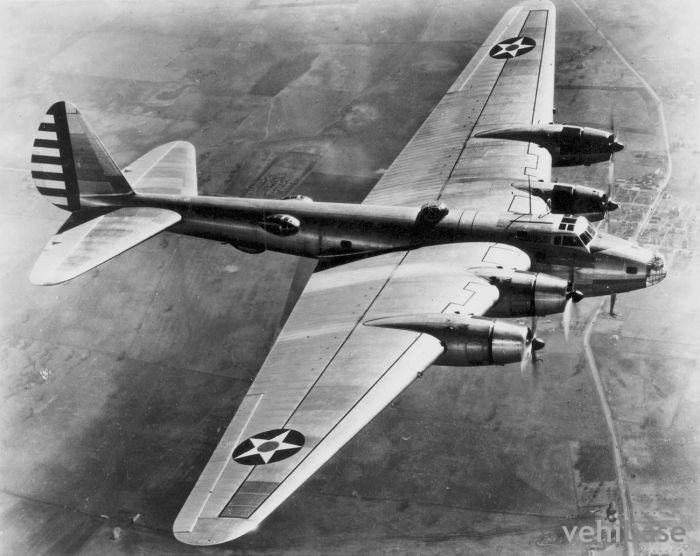
The Boeing XB-15 is an American experimental bomber aircraft that was developed during the 1930s. It was designed by the Boeing Company as a long-range strategic bomber, and it represented a significant advancement in bomber technology at the time. The XB-15 was one of the largest aircraft of its era, and it played a role in the development of heavy bomber concepts.
Featuring a four-engine design and the ability to carry a substantial payload, the XB-15 was initially intended for long-range bombing missions. It underwent testing and evaluation, but only one prototype was built. While the XB-15 did not see operational service, it influenced the development of future heavy bombers and helped pave the way for strategic bombing capabilities during World War II.
Key Features
Pros
Cons
Frequently Asked Questions
Did the Boeing XB-15 see operational service?
No, the Boeing XB-15 did not see operational service, as only one prototype was built, and it was primarily used for testing and evaluation.
How did the XB-15 influence the development of heavy bomber concepts?
The XB-15 played a role in the development of heavy bomber concepts and paved the way for the strategic bombing capabilities that would be important during World War II.
What was the distinctive feature of the XB-15's design?
The Boeing XB-15 featured a four-engine design and a focus on heavy payload capacity, making it one of the largest aircraft of its era.
Why is the XB-15 historically significant in aviation history?
The XB-15 is historically significant as an early example of an experimental bomber that influenced the development of heavy bombers and strategic bombing capabilities.
4 members saved it
Related planes

Boeing 737-300
(2) 5
Boeing 737-400
(5) 6
Boeing 737-500
(5) 6
.jpg)
Boeing 737-600 (NG)
(1) 2
.jpg)
Boeing 737-700 (NG)
(1) 3
.jpg)
Boeing 737-800 (NG)
(1) 4
.jpg)
Boeing 737-900 (NG)
(4) 4

Boeing 767-200 BDSF
(1) 2
.jpg)
Boeing 777 Tanker (KC-777)
(4) 9

Boeing 777-200ER
(1) 3
Boeing B-17 Flying Fortress
(1) 2
Boeing B-29 Superfortress
1
Did you know?
The XB-15 was known for its impressive size and payload capacity, making it one of the largest aircraft of its time.
Although it did not enter operational service, its design and testing contributed to the evolution of bomber aircraft during the pre-World War II period.
